
 Kiwi company Organic Initiative (Oi) is calling for stronger regulation in tampon labelling, introducing a new standard that includes independent batch testing and greater transparency around estrogenic activity.
 This follows findings from independent scientific testing undertaken by InsituGen, a research company started out of the University of Otago which shows that mainstream tampon brands in New Zealand and the United States leached estrogenic activity including products marketed as “organic” associated with the presence of endocrine disrupting chemicals (EDCs). EDCs are linked to hormonal cancers including breast and cervical cancer, hormone disruption, endometriosis, and infertility. These findings highlight the need for greater transparency and raise important questions around ingredient disclosure.
It is not “ubiquitous” and that with a targeted approach that safer compositions of tampons, with regards to estrogenic EDCs, are possible. EDCs and metalloids have previously been described in tampons, but Oi is the first to target safer formulation, test safer formulation by specifically reaching out to UoO, and InsituGen, to test the safer formulation, and then the first to want to safeguard women by offering a scientifically proven safer choice.
Founder Helen Robinson, a breast cancer survivor, said the results were deeply concerning.
“Women deserve to feel confident in the products they use. Greater transparency and higher standards across the category are essential to support informed choices.”
Following these findings, Organic Initiative shared the results with affected manufacturers and encouraged a review of product formulations. While discussions have taken place, the company believes broader industry action is needed.
Oi has also called for a review of publicly funded menstrual products currently distributed in New Zealand schools, to ensure they meet higher safety and transparency standards.
Endocrine disrupting chemicals (EDCs) are found in all sorts of daily use items – our drinking water, water bottles, make-up. But tampons are an internal product, and the tissue in the vagina is highly absorbent, so an exposure to EDCs can be more serious, if proven.
“If we’re putting a tampon, for five, six days a month, for many years, into a highly absorbent area, when we know that EDCs can accumulate in the body… this is something that is of concern,” says Dr Heather, Chief Scientific Officer at InsituGen who led the study.
“EDCs are of particular concern for women, because our hormonal systems are so “finely tuned””, Dr Heather says. “Our estrogen levels fluctuate throughout our menstrual cycle and have a powerful effect on our overall health – not just the reproductive organs, but also our bones and our brain. If you have EDCs in your body, at concentrations that are high enough to interfere with that natural estrogen cycle, then that system can break down.”
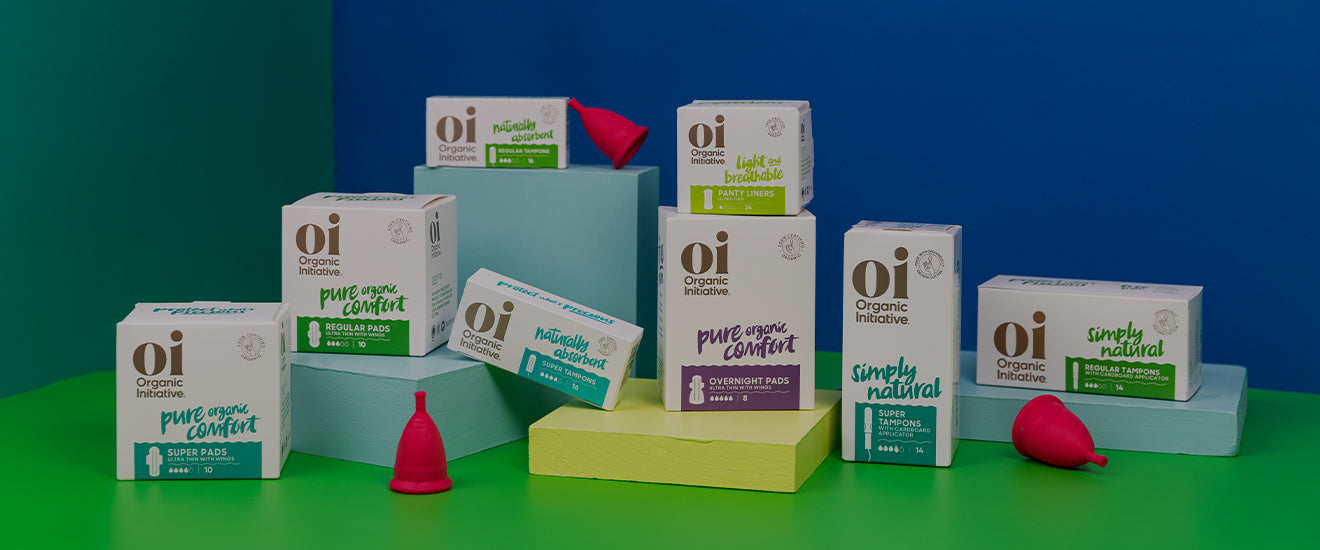
In response, Organic Initiative has updated its packaging to include “Estrogen Free” alongside its organic certifications and has committed to ongoing independent batch testing of all tampon products.
“We believe women should not have to question what they are putting in their bodies. This is about raising the standard for the entire category,” Robinson said.
Organic Initiative was founded with a mission to create period and incontinence products that are better for the environment and aligned with women’s health and hormonal safety.
The company is now advocating for legislative change to require full ingredient disclosure on tampon packaging and to establish clearer safety standards across the industry.
Read the study: Estrogenic activity in tampon products
No Greenwashing.
Period.


